Friday, January 14, 2011

Tolkien: It’s About the Journey. Setting, language, society, and race in The Lord of the Rings trilogy.


My cat, by instinct, knows when she needs to gnaw on my houseplants to soothe her troubled belly, and sometimes I, in much the same way, know instinctively what I need to read to soothe a troubled soul. Over the holidays I needed rest, and a good story to take my heart on vacation. My hand reached for The Hobbit, despite a tall bedside stack of new books waiting to be read, and I plowed straight onward through the Lord of the Rings trilogy.

I’m a different traveler each time I pass through Middle-earth. I pay less attention now to landscape and geography – I’ve already paid my dues to the maps of Mordor and Gondor.


It’s a travel story. The geography is a character, and by golly, to Tolkien at any rate, place details matter. I wonder what percentage of detail of every crag and bluff and outcrop would have been struck by the red pen of modern editors, not to mention the seven different names in three different dialects for each leaf, mound, tower, or Numenorean. But lest we criticize, where would modern fantasy be today without Tolkien in the first place? The landscape, and the language that arises from it, mattered to Tolkien, and not merely intellectually. (He was a noted philologist and linguist.) Desecration of the natural world to feed the maw of progress was one of his chief concerns, as he states clearly in his prologue, and as he illustrates plainly in the penultimate chapter, “The Scouring of the Shire.”

The “high” fantasy language, the over-embroidered speech, is both one of the great nostalgic comforts of reading Tolkien, and at times one of its barriers. My older attention span is more fractured, so the language can chafe at times, like a granule in my sock, but not enough to justify removing favorite socks. (That analogy is so reekingly bad, I just have to leave it in.) Language, just like scepters, crowns, and garments of rank, are outward signs and tokens of inner nobility and greatness in Tolkien’s well-ordered world. The series is a love song to a dying hierarchical notion of English society, as reckless industry and unlearned democracy threatened to topple all that was ever sweet and comforting about traditional English life. Or so, I think, did Tolkien feel. And he wasn’t alone. C.S. Lewis, T.H. White, and Kenneth Grahame, and countless other British fantasists sang the same love song in their own tune.

It’s harder now to reconcile myself to Tolkien’s treatment of race/color and gender. Thank heaven for Galadriel and Eowyn who raise the Girl Power Quotient from zero to, er, not-quite-zero. Skin color and purity of bloodline as tokens of greatness … the obvious slant against “swarthy” and even “Black” minions of the Dark Lord must be at least a partial product of Tolkien’s times. Perhaps this is merely the mythology of Middle-earth, with no reference to our world, but I think not; the allusions are too many and too obvious. The racial purity that places Aragorn on the throne feels much like the creed of Voldemort’s Death Eaters now. But it wasn’t meant to be, and Tolkien’s heroes didn’t feed on death nor practice genocide. Mercy, rightful governance, and freedom to live and let live mattered to him. Some of his heroes, hobbits for one, and Wild Men of the woods for another, seem absolute mongrels in contrast to the Elfstone, but they get their moment of heroism too.

Tolkien wrote a story of high heroism, of sacrifice and miracles, of an age when despite desperate odds, hopelessness and terror, a generation mounted up its courage and fought on through dark night to the tide-turning at the dawn. Again and again this happens – at Helm’s Deep, on the fields of Pelennor, in the mines of Moria, even in Bilbo’s encounter with the trolls. Stay defiant in the face of destruction, and hold on until the morning. It’s a tale of triumph, yet also it’s the tale of the dying of the Third Age, when all that was holy and magical in Middle-earth passed away, the good and the bad mingled. To rid the world of Sauron, Gandalf had to leave.

Tolkien’s generation, rightly called The Greatest Generation, has all but passed away, and if a man who fought in WWI and lived through WWII is not entitled to weave such a story as this one, I’d like to know who is. But his age, with its courage, and its fatal misconceptions, is fading away. The Greatest Generation helped stop The Third Reich and interred Japanese Americans. They are our fathers, grandfathers, uncles; our mothers, grandmothers, and aunts. They deserve our forgiveness for their sins and errors, just as we will one day need our children’s forgiveness for our blindness and waste and greed. But forgiving does not require us to adopt their prejudices.

I reached for Tolkien because I needed a zap of idealism along with the comfort of a high adventure. I needed to borrow his belief in inner nobility, greatness, and courage, even as I set aside his notions of how such greatness is bred and fostered. And mostly, I think, I needed to be carried away to another world for a good long stretch, such as only Tolkien, with his thousand characters, geological micro-detail, and songs in Elvish could promise.

Saturday, November 13, 2010

Going Public

On Tuesday, October 12, my latest hardcover, Secondhand Charm, hit the shelves, published by Bloomsbury Children's Books. So began a whirlwind of activity which I will try to document below. But it didn't actually begin there. Earlier this season, the first two books in my new Splurch Academy for Disruptive Boys series hit the shelves, and my sister Sally and I celebrated with a large launch party at the Pittsford Barnes & Noble. Here's a picture of just the relatives who were there.


And here are Sally and me, signing books together for the first time. Aren't our mom's gladiolus pretty, there in the window? It was wonderful to see so many family and friends, and the Pittsford B&N hosted us delightfully.


On October 2, Sally and I visited Books of Wonder, the magnificent children's bookstore in Manhattan famous for its Oz obsession, its rare art, and its cupcakes, as well as its wonderful titles. We sat on a panel with Jon Scieszka, Michael Buckley, and Nick Bruel and talked about humor and creating silly books. Here we are signing and talking.


Not sure why these pictures insist on being itty-bitty. I mooched them from Sally's friend Alan. Moving on. Next came the launch parties for Secondhand Charm. Part one, hosted by The Friends of the Maynard Public Library, took place Tuesday, October 12. Tragically, my husband and I forgot to take pictures. If anyone else took any, please send them along and I'll update this post. We had a great turnout, and fantastic octopus-shaped decorations, along with other creepy crawly fun stuff in a culinary tribute to the cuisine at Splurch Academy. We repeated the fun two nights later at The Wellesley Booksmith, that pearl among indie bookstores, where again we had a fantastic turnout. Here I am, signing books afterwards.


During that same week I visited Greenhalge Elementary School in Lowell, MA; Fowler Middle School in Maynard, MA; and The Paper Store in Sudbury, MA. The following Monday I (barely) caught a plane for Salt Lake City, where I stayed with dear friends and visited four schools, two bookstores, and a library for author visits & signings. I didn't do as good of a job taking pictures in Salt Lake, so I'm mooching off friends' blogs. I visited the Orem Library, The Waterford School in Sandy, Beacon Heights Elementary School, Settlement Canyon Elementary School in Tooele, and Northlake Elementary School, also in Tooele. I also had my first television appearance on Park City TV, and if I can put my hands on the DVD I brought back with me, I'll post the clip on YouTube. Utah was breathtakingly beautiful, and it seems I got in and out right before winter snow began to strike. I had the chance to catch up with many old friends while I was there. The Orem Library treated me to a goody bag that included a dragon pin. Fun! One of the high points of the trip was meeting my author pen pal, Jessica Day George. We'd corresponded and talked on the phone for ages, and she was just as fun in person, and then some. We did evening signings together at The King's English in Salt Lake City and The Purple Cow in Tooele. Pictorial proof below.

Jessica is an obsessive knitter, and while we took questions she worked on a sleeve for her son's Ron Weasley Halloween costume. Envy! I wish I were that cool of a mom, and that good of a knitter. My kids had to fish from last year's box this year, or make their own costumes.

The pictures above were taken at the art gallery next door to The King's English by my dear friend and superblogger, Stacey Ratliff (pictured with Jessica and me at our signing at The King's English, below).


Isa Ventura of The Purple Cow treated us like royalty and fed me my very own purple cow at a spiffy little bistro in Tooele. Fun town! The Purple Cow and me, we're bonded for life. But the fun didn't stop in Utah. I returned home for a breathless week tried to dig out from under all the mess. While there I paid a visit to the Peabody Barnes & Noble, as well as another visit to the Fowler Middle School. On the Thursday before Halloween, we had a wonderful event at the Belmont Public Library with a full crowd of young readers and their parents. Here's a picture of three adorable reader gals.


Then, on Halloween afternoon, I got in my car and drove to my homeland of Western New York for a solid week of events there. On Monday I visited DeSales School in Lockport, NY, followed by a signing at Monkey See, Monkey Do bookstore in Clarence. I saw many dear friends, and made some new ones, including an inspiring family with an ambitious goal to visit and chronicle all 37 library branches in the Erie County Library System. Their blog is a terrific piece of advocacy for the role libraries play in keeping communities vibrant. Here I am with Anna and MaryGrace in a picture I'm borrowing from their blog.


On Tuesday, November 2, I visited my old alma mater, Clifford H. Wise Middle School, in the morning, and another alma mater, Oak Orchard Elementary School, in the afternoon. In the evening I signed books at Lee-Whedon Library in Medina. I had a lovely lunch with the fifth-grade teachers at Oak Orchard. I saw many dear and familiar faces in Medina, who haven't changed a bit and still look fabulous. The Book Shoppe of Medina and the Lee-Whedon library hosted me in style.

On Wednesday I visited St. Joseph's Catholic School in Batavia, as well as John Kennedy Elementary School. In the afternoon I visited Present Tense Books in Batavia, another indie store that I adore, and not only because it's owned by my cousin, Erica Caldwell. While I was there, I lost my voice! I suppose the back-to-back events, travel, and lack of sleep were a bit more than I could handle. Erica's peach of a husband, Darrick, trotted right out and got me steamed milk from the local coffee shop, which wetted my whistle just right.

So it was cough drops and bottled water at the ready, and whispering into microphones for the next two days of school events, but miraculously I was able to croak out enough. I visited The Norman Howard School in Rochester, NY on Thursday the 4th, where they treated me to a tour, a signing, authentic WNY cider, and donuts! Ian, Sam, and Zoe were the best tour guides an author could hope for. What a great school. From there I trotted over to School 12 for three back-to-back sessions with 4th and 5th graders. I drove straight back to my mom's that night and collapsed, mute as a sponge, and let my mother and sister dote on my like only the gals in my family can. Next morning I was up and off to Geneva Middle School (as well as two elementary schools) for five straight presentations. My good friend, Jonathan Porschet, is the librarian in Geneva, and he fed me his personal hummus, a kindness I shall not forget. (I'm noticing a disturbing trend of reporting what people fed me everywhere I went ... does it show that I really like to eat? And be waited on? It's plain to me as I look at these pictures that I like to eat. Oof.)

My week in New York ended with a bang at the Rochester Children's Book Festival, organized by the extraordinary Sibby Falk and Katherine Blasi. There were over 40 children's book authors there, and my only regret is that I didn't have more opportunities to hobnob with them all. The night before, they got together for dinner, but I skipped re: dead vocal chords, and the night of the event, they also supped from a common table, but after seven days away from my family, I was anxious to get back. What an outstanding turnout they had! It was enough to revive my faith in families encouraging their children to be readers. I was lucky that I got to sit next to Kate Messner, also from Medina, NY, the entire day. Kate was best friends with my older sister in junior high, and our paths crossed again a few years ago at an SCBWI conference. Now we both publish with Bloomsbury/Walker, among other houses. Her Brilliant Fall of Gianna Z. was an E.B. White Read Aloud award winner, and I'm already hearing good buzz about her upcoming Sugar and Ice. We promoted each other's books as easily as we could talk up our own, and that was tons of fun.


I dressed in a prison suit as Cody Mack, the hero of the Splurch Academy for Disruptive Boys, which was pretty weird, but Kate brought an actual beaver along, so I don't feel very self-conscious about my sartorial oddities. Here's a short video of the festival. These photos, BTW, above and below, were mooched from Kate's blog.


I got to see many wonderful author friends there, including Peggy Thomas, Elizabeth Bluemle, and Michelle Knudsen. Next year, if I'm lucky enough to come back, I'll make sure to eat more food with more authors. That's my new resolve. But my resolve du jour is to do less eating altogether ... ugh.

Now I'm back home, and the V.I.P. treatment has dwindled a notch, but there's no place I'd rather be. I visited the Russell Street School in Littleton and Merriam Elementary School in Acton, both yesterday, and there will be more events to come, though not with same machine-gun rapidity of the last few weeks. I'm happy not to live out of a suitcase. I keep thinking back, though, on how lucky I am that books give me an excuse to visit nearly all the places where I have dear ones, and reconnect with them in ways that otherwise might not be possible. I couldn't name you all by name on this blog, but if I got to see you this fall, I'm the lucky one. Please keep in touch.

And for all you bookstores who hosted me, and for hundreds of others who keep books alive in towns large and small, this one's for you. Here's today's humor column in the Metrowest Daily News. It's my small, inadequate way of saying thanks.

Wednesday, September 22, 2010

Stuck in Oz

Last night I saw Wicked at the Boston Opera House with my husband and my sons. I’ve been useless all day today, stuck in Oz, picturing the story, singing the songs, loving Elphaba. I’m scheming ways to get back, even though ticket prices make that a foolish notion, even though I’m a grownup who should know better. I want to go back to that place, that time, that immersion in the story.

This, I recognize, is the disease that made me want to be a writer.

What’s going on here? As Martine Leavitt said in a lecture I heard her give this summer at Vermont College of the Fine Arts, the older I get, the harder it is for me to suspend my disbelief in a story. Samuel Taylor Coleridge considered this the touchstone for success in the reader’s engagement with fantasy. Perhaps I’m a sucker for musicals, but Wicked’s Oz shattered my disbelief. It was the Oz I recognize from Frank Baum’s The Wonderful Wizard of Oz, and from the 1939 MGM film with Judy Garland, so I entered this world of wonder with wide open eyes and fresh expectations, but I was already comfortable with the conventions of Oz. Its rules and denizens required no explanation, and the skillful twists with which the new invoked the old were a frequent pleasure.

But it takes more than just a world to make this mother and cubicle dweller spend her day composing emails and browning pot roast with her heart over the rainbow, romantically imagining herself completely green. It takes characters I can love intensely to snare me into another world and make me want to stay there. Perhaps “love” is too generic. Wicked’s chief players were complex, conflicted, immoral, amoral, passionate, self-absorbed, indifferent, casually cruel, idealistic, betrayed. In short, the stuff of family theater. They hooked me. I keep thinking about them. I want another invitation to their party. I’m like the wizard who dallied (wink) indulgently when he ought to have gotten back to Kansas and on with his snake-oil selling business.

This is why series have such power in our culture. Even at the risk of wearing out worlds and characters we adore, the consuming public would rather go back, and back, and back again to our favorite stories, served up in new episodes like warmed-up leftovers smothered in canned gravy. I’m no different. I clamor for sequels just like everyone else. At least now, if I want to get stuck in a world, I can create one.

In this instance I’m fortunate. If the textured landscape of Broadway’s Oz pleased me, I have Gregory Maguire’s novel to look forward to, and a signed copy on my bedside table to boot. And, what luck! It’s the first of a series. I can dally, stuck in Oz, for as long as I like. Wonderful.

Thursday, August 12, 2010

The True Meaning of Smekday, & St. Patrick of Ireland


The True Meaning of Smekday, by Adam Rex (Hyperion 2007).

A marvelous middle-grade mashup, irreverent and smart and funny. Equal parts Doomsday, alien adventure, road trip tale, biting satire, and, er, girl meets Boov. Begins with a mole and ends with a cat, and I won't say much more, other than that Gratuity Tucci, our protagonist, is as feisty and funny an unlikely heroine as you'll find this side of the galaxy. As for Adam Rex, the author, as if it weren't bad enough to be that clever and funny, also illustrated the graphic novel excerpts throughout. A bit of swearing if anyone's concerned about that, though Gratuity always apologizes, and anyway, she's being shot at by an army of poomps, pardon my language.

And now, in a complete reversal of genre:

St. Patrick of Ireland: A Biography, by Philip Freeman, Simon and Schuster, 2004
In keeping with my fascination with early Catholics (tardy Catholics intrigue me far less), I recommend for your delectation this slim little volume. If you can get past the bestial Druid rites of kingship, you'll love this. (Perhaps the bestial Druid rites of kingship will be an attraction for you.) A profitable read, accessible and interesting. A close look at the remarkable life and faith of St. Patrick of Ireland as revealed through his only surviving writings, with all the shamrock nonsense stripped away. Provides a thorough context of his life and times -- the social, political, adn religious backdrop of Britain and Ireland during the decline and fall of the Roman Empire, loosely contiguous with the life of St. Augustine of Hippo. Well worth reading.

Monday, July 19, 2010

Reading Roundup

Books I've enjoyed recently:


CATCHING FIRE by Suzanne Collins (sequel to Hunger Games)
I started reading this the same night that I finished HUNGER GAMES, even though it was 3 a.m., and anyone who's read HG will understand exactly why. The suspense doesn't stop, and Catniss's victory quickly turns to more dire peril. Discussion question: how long, YA readers, do we remain patient with the female hub of a love triangle who toys with two hearts and delays making up her mind? At one point does she lose sympathy for not playing fair? Make no mistake: I'll be waiting in line for my copy of MOCKINGJAY.


ORACLES OF DELPHI KEEP by Victoria Laurie (Delacourte 2009)
This debut novel impressed me for its ambitious interweaving of ancient oracles, elemental demons, treasure hunting, exotic adventure, ghastly beasts, historical fiction (pre-WWII Britain), and middle grade orphan friendship story. The beasts in particular stand out in my memory. Hats off to Ms. Laurie for her greasy-hair-by-slavering-fang depiction of her sinister hellhounds. Somehow a beast scene that in audio format lasted about half an hour had me on the edge of my seat the entire time. Note: a sequel, THE CURSE OF DEADMAN'S FOREST, releases August 24, 2010.

What I'm reading now:

ST. PATRICK OF IRELAND by Philip Freeman (Simon and Schuster 2005)
Technically, I'm reading this as research, but I'm enjoying it immensely. My appetite for historical study, particularly through the lens of the lives and times of literary and religious figures, is ever-increasing. This is highly readable.

In other news:
I've had two columns come out in the MetroWest Daily News lately. They are:
The failure I'm most proud of, and Weighing in on running.


My next two books release to stores in 24 days! THE RAT BRAIN FIASCO and CURSE OF THE BIZARRO BEETLE, both titles in the SPLURCH ACADEMY FOR DISRUPTIVE BOYS series, release August 12. Check out www.splurchacademy.com for more info. The pictures you see here are being made into washable tattoos, which we'll have available at every signing & event. Don't miss yours!

My goal for the summer: if I must waste time, waste it reading! (Which, of course, is never a waste. But I need to trick myself sometimes.) May you have wasteful summers full of books, too.

Tuesday, June 22, 2010

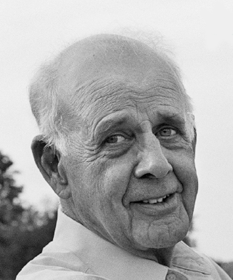
Snippets from "Sabbaths" by Wendell Berry


At my bridal shower, fifteen years ago, I received an unusual gift: a slim volume of poetry entitled "Sabbaths" by Wendell Berry. I had never heard of him. The friend who gave it to me wrote, simply, "Good luck" on the title page, and I don't blame her. I was 20 years old. I assumed she chose the book because I was about to become a Berry.

The dishes are broken, the towels long frayed and cut into rags, but this shower gift remains, and at certain moments through the years I've returned to this volume to immerse myself in Wendell Berry's sabbatical meditations. I have no experience critiquing poetry -- I fear I lack the vocabulary, and the breadth of exposure to do it credibly -- but I love these poems, and through them, this man, Wendell Berry.

Fast forward fourteen years to the publication of my first novel. I bought a plane ticket and flew to Salt Lake City for my first-ever out of town book tour event. I contacted the instructor of a distance writing class I'd taken, years back, and invited him to come to my event. He had said nice things about my writing nearly a decade prior, and I wanted him to know his student had made good. He politely declined, saying Wendell Berry was also in town that night. I didn't blame him a bit.

It startles me to learn, with a little research, that Berry has written a handful of novels and dozens of essays, critiques, volumes of poetry. I only know this one collection. For me he remains a Sabbath voice, someone I hold secret, as though these poems connect us privately.

I am a Sabbath-keeper, in my imperfect way, and as my writing life has gotten more hectic, I've felt the need all the more to guard this day of worshipful rest zealousy -- this cathedral in time instead of in space. However pressing the Monday morning deadline, I still won't work that day. It's reckless and wrong to attribute one's blessings to any worthiness on their part, but I have felt this hallowed time to be a lifeline for me, and a conduit for heaven's help through the frantic balance of my week.

I'll share below three moments from this volume that resonate for me. All selections are from Sabbaths by Wendell Berry, North Point Press, San Francisco, 1987.

From poem IV:

Projects, plans unfulfilled
Waylay and snatch at me like briars,
For there is no rest here
Where ceaseless effort seems to be required,
Yet fails, and spirit tires
With flesh, because failure
And weariness are sure
In all that mortal wishing has inspired.

Poem X (in its entirety):

Whatever is foreseen in joy
Must be lived out from day to day.
Vision held open in the dark
By our ten thousand days of work.
Harvest will fill the barn; for that
The hand must ache, the face must sweat.

And yet no leaf or grain is filled
By work of ours; the field is tilled
And left to grace. That we may reap,
Great work is done while we're asleep.

When we work well, a Sabbath mood
Rests on our day, and finds it good.

From poem II:

The mind that comes to rest is tended
In ways that it cannot intend:
Is borne, preserved, and comprehended
By what it cannot comprehend.

Your Sabbath, Lord, thus keeps us by
Your will, not ours. And it is fit
Our only choice should be to die
Into that rest, or out of it.
---

So thank you, Jeannie T., for this gift that keeps on giving. Used editions of this collection can still be bought, I believe.

Monday, June 14, 2010

The Hunger Games by Suzanne Collins

It's laughable for me to blog about The Hunger Games by Suzanne Collins since I'm clearly the last person on the planet to read it, so nothing I can add will benefit humankind. I have a pernicious stubborn streak, and the more I heard THG praised, the more I procrastinated reading it. I even had an advance reader copy before the book came out -- I could have scooped you all. But I held off. There hasn't been much time to read anyway this spring. Finally this week I found some time and knew I needed a compelling read. Yikes! I just finished, and I may not sleep tonight. At a book launch party this evening at The Wellesley Booksmith for my friend Jess Leader's new book, Nice and Mean, I couldn't resist buying Catching Fire. And those of you who've read THG will know exactly why. Those of you who haven't, should. Gut-churning suspense, anguished and confused love, a dazzlingly corrupt and convincing post-apocalyptic society, and a heroine we all wish we were. YA dystopian adventure; Strongly recommended. But you already knew that.